Why We Said Goodbye to Our Sheep
When we first came to view Whasdyke in April 2012, the lady who owned the farm had just one question for us
“What about my sheep?”
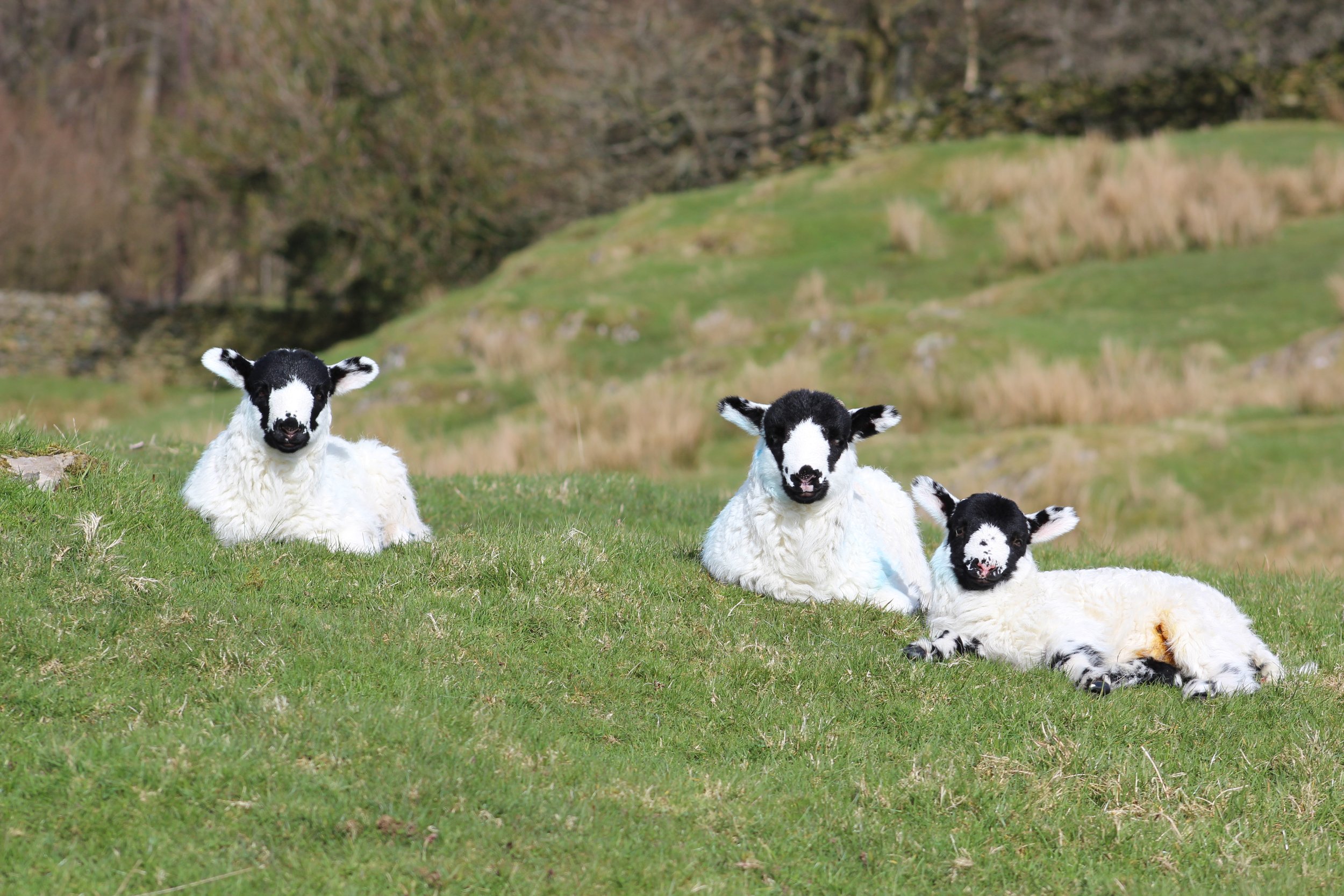
She kept a small flock of sixteen Rough Fell sheep—a traditional Lakeland breed, perhaps not as famous as their Herdwick cousins, but every bit as much a part of these fells. It was clearly important to her that they stayed with the farm. Realising this was a condition close to her heart, John happily promised that not only would we keep the flock, but we’d build on it too.
Over the years, the descendants of those original sixteen came and went. Every spring brought the excitement of lambing, with all the joy of new life and, inevitably, the sadness that farming sometimes brings too. John kept his promise, and for more than a decade the flock remained part of Whasdyke.
Then, a couple of years ago, we made the decision to enter a Higher Tier environmental stewardship scheme. It meant changing the way we managed parts of the farm to encourage a greater diversity of wildflowers, insects and wildlife. Sheep are wonderful conservation grazers in the right setting, but because they graze so closely, some areas needed a lighter touch if those plants were to flourish.
It wasn’t an easy decision. The previous owner had sadly passed away the year before, but John felt he had honoured the promise he made all those years ago. That made saying goodbye to the flock just a little less bittersweet.
It would have been easy to see that day as simply the end of our sheep flock. In reality, it marked the beginning of a completely new chapter for Whasdyke.
Joining the Higher Tier environmental scheme has encouraged us to look at the farm with fresh eyes. Instead of asking only what the land can produce today, we’re also thinking about what we can leave behind for future generations. What can we do now that will benefit the wildlife, the landscape and the farm long after we’re gone?
Over the next few years we’ll be planting around 2,500 native trees to create grazing woodland. Oak, birch, alder, rowan, wild cherry, Scots pine and many more will gradually transform parts of the farm. Beneath them, hawthorn, hazel, holly, dog rose, spindle, crab apple, willow and other native shrubs will provide food and shelter for birds, insects and mammals throughout the seasons.
As if that wasn’t enough, we’ll also be planting more than 1,100 wildflower plugs by hand. It sounds wonderfully idyllic until you realise every single one has to be planted individually! I have a feeling there’ll be a few favours called in from the extended family before that job is finished.
Of course, none of this means we’ll suddenly have a woodland overnight. These are changes we’ll probably spend years watching unfold. Tiny saplings will become trees, wildflowers will slowly establish themselves, and, with a little luck, the farm will become even richer in wildlife than it is today.
The sheep made way for all of this. We didn’t say goodbye because we stopped loving them. We said goodbye because the future of the farm is changing, and with it, our role as its custodians.
I often think back to that conversation in 2012.
“What about my sheep?”
I hope the previous owner would understand that the promise John made all those years ago was never really just about sheep. It was about caring for this little corner of Cumbria and doing what we believed was right for the land. We kept that promise for more than a decade. Now it’s time to write the next chapter.
Perhaps, years from now, we’ll walk through young woodland filled with birdsong, watch butterflies drift across the wildflowers, and see cattle sheltering beneath trees that weren’t here before. If that day comes, we’ll know that saying goodbye to our sheep wasn’t really an ending at all. It was simply the beginning of something new.