
Patch’s Girlfriend
When we arrived at the farm in 2012, one of the many, but maybe not the most pressing, jobs was the large rocky hole in the middle of the lawn. Adjacent to the hole was a rotting wooden frame with a length of hose and an electrical cable wrapped around it.
Clearly, the previous homeowners had a grand plan for a pond project which had never quite materialised.
John’s thoughts on it were simple…. fill it in or create a pond, but it certainly couldn’t stay as it was, especially the prominent wooden stand on the verge of collapse.
So it was that the following winter, the hole was dug out again, doubling the footprint on the lawn. Sand was spread and raked and then the enormous pond liner was unfolded, covering the whole area. By the time the water was in and a selection of pond-loving plants were added, it looked pretty, but it really needed the wildlife to take residence and make it a home.
The first few years we got newts and toad spawn, dragonflies and pond skaters, but I had high hopes of enticing wild ducks to our humble pond.
The spring of year four, it happened. A drake mallard arrived and the following day he brought his partner. She obviously wasn’t impressed, as they didn’t stay, but we were at least on the pond map, as many more pairs came for a viewing, staying a day or two before departing.
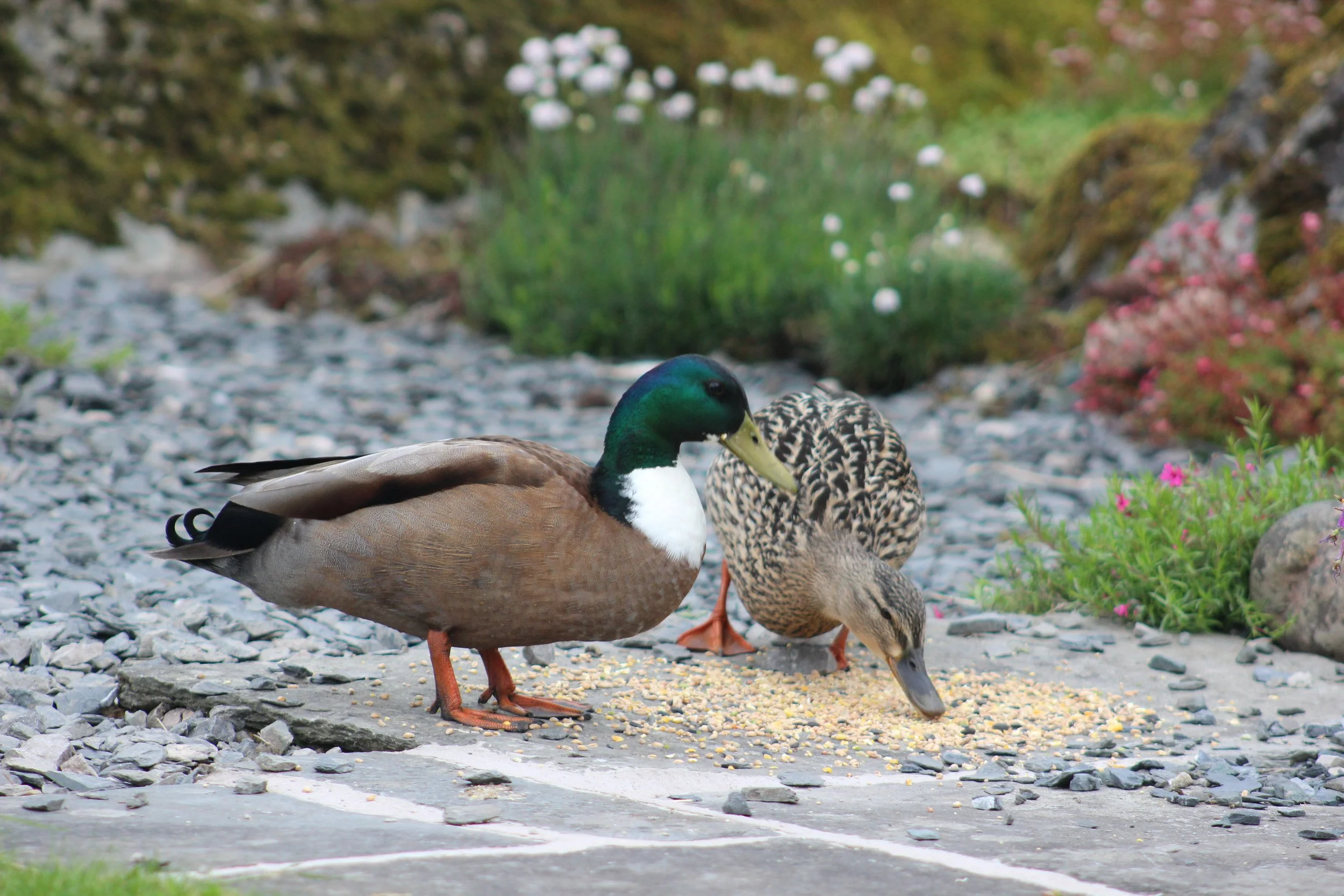
Four years ago, we had a memorable pair arrive. He had a large white circle in the middle of his chest, not usual for mallards, and she was unusually brave, willing to hang around at a distance when I came out with food. Once a day she came out of the undergrowth for her tea and then left, heading in the same direction.
Then one day she came out of the undergrowth followed by a host of very young chicks.
It was one of those moments when nature rewards your efforts. It was joyous!
It was evident that the boys had inherited the same spot on the chest as their father.
Sadly, they only stayed a day and then the whole family disappeared, until the following year when a lone drake again appeared, sporting a large white patch on the chest, and a few days later turning up with his girlfriend. We had no idea if this was the same pair from the year before or a matured chick.
This pair stayed with us for months. They became part of the garden. Her indignant calls and quacks when any other lone males splashed down onto the pond were heard throughout the garden, and she took to landing on the conservatory roof to evade their advances.
What made her so special was that when I came bearing gifts for the bird table, the pheasants, partridge, pigeons and all the other ducks would run for cover, but she turned and ran towards me, quacking her greeting.
I became so fond of her and eventually got her eating out of my hand.
One day I found her in the middle of the lawn, with Patch, as we now called him, loyally standing by. I could tell quickly something was wrong, as she didn’t run towards me but quacked loudly and started to drag herself along the ground.
She had broken a leg.
My duck knowledge and medical abilities were woefully inadequate for the problem, so I sought advice from a true countryman. He suggested leaving her, feeding her yes, but not interfering, so that’s what I did.
Each day she improved a smidgin. After a fortnight she was walking, but rested her leg when eating. Patch stayed at her side the whole time. He never abandoned her and loyally stuck it out.
Eventually they left and disappeared for the winter, but they arrived back this spring.
She hasn’t changed. She is still as happy to see me, as long as I have food to offer. She is so confident that if she’s in the garden and hears my voice in the farmyard, she comes waddling around the side of the house, quacking furiously with purpose.
You don’t have to be an animal communicator to work out she’s saying:
“Er, hello! I’m here. Feed me!”
Much to the amusement of the postman. 🦆