Haymaking – A Lesson in Patience
Haymaking is one of the most important—and often most stressful—parts of the farming calendar. Everything depends on the weather. Too dry and the grass simply stops growing. Too wet and the hay can’t be cut or dried properly. Every year brings a different challenge.
One year it seemed to rain every day throughout February, lulling us into a false sense of security. Then it was practically dry until June. During those hot, dry weeks the grass simply stopped growing. The fields turned burnt brown and tinder dry, the soil peeled away from the rocky outcrops, and the ground became so parched that when the rain finally arrived, it couldn’t soak in. Instead, it ran across the surface, forming little riverlets everywhere. That year our hay crop was poor and the number of bales was far lower than usual.
This year was much kinder. A damp spring followed by a beautiful spell of warm sunshine produced lush, thick grass—perfect for haymaking.
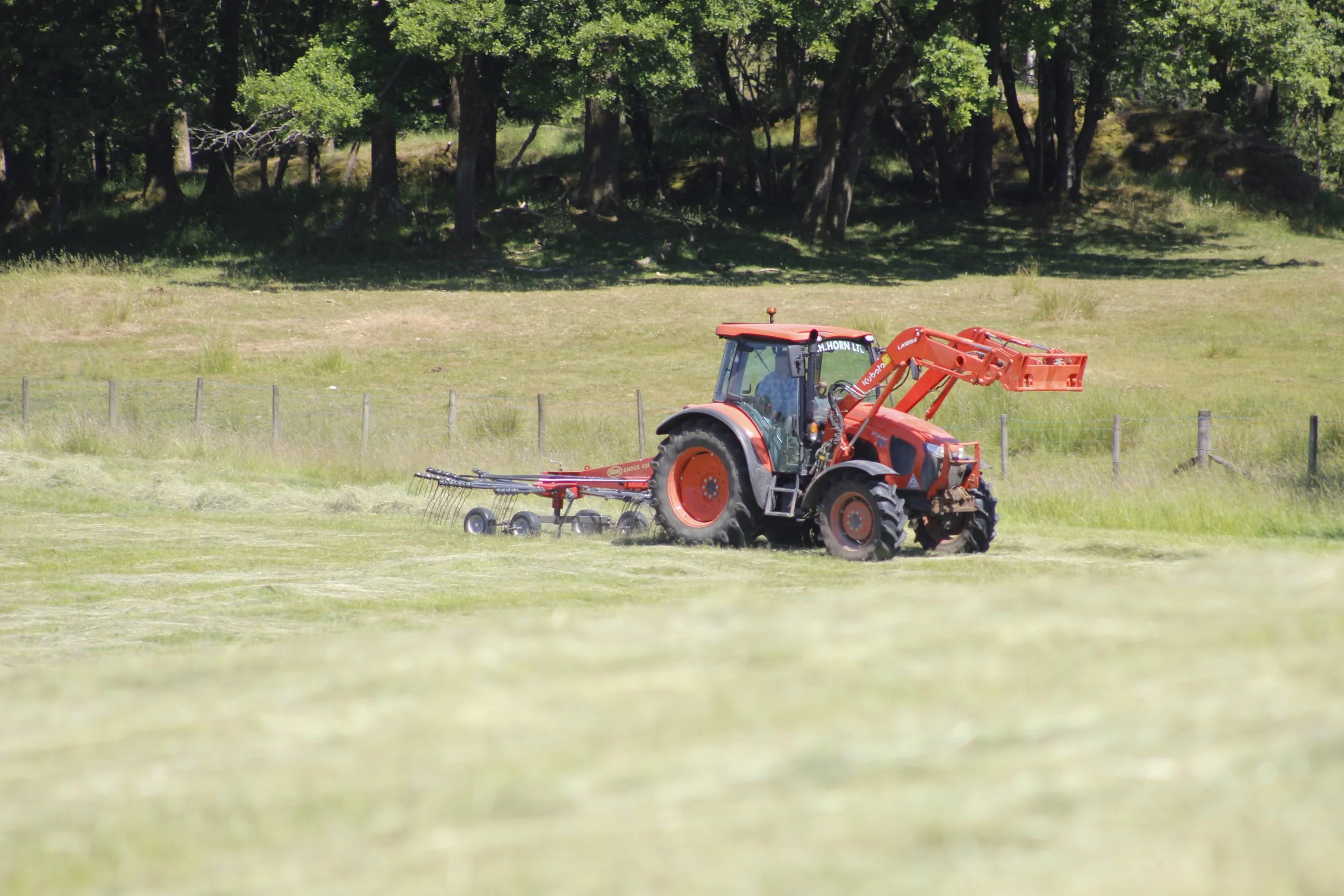
For a small farm like ours, haymaking is always a team effort. We rely heavily on neighbouring farmers with the specialist machinery and experience needed to cut, turn and bale the hay efficiently. It’s a wonderful example of how farming communities work together, with smaller farms often depending on the skills, equipment and generosity of those around them.
This year, like every year, timing has been everything.
The environmental scheme we have chosen to be part of means we cannot cut our hay until the 1st of July. This is designed to protect ground-nesting birds and give them the very best chance of successfully fledging their young.
For us, this is particularly important. It would make no sense to put so much effort into creating the perfect conditions for wildlife throughout the spring, only to disturb them when haymaking begins.
So, when the June heatwave arrived and fields all around us were being cut, John was watching the weather, checking the forecast and very much sitting on his hands—knowing the grass was ready, but also knowing we had to wait.
Thankfully, early July brought us the settled spell of weather we had been hoping for, giving us the opportunity to get the hay cut, dried and safely gathered in.
We always leave generous margins around the edge of our hay fields. Originally, it was simply a way of leaving the cows a few days of longer, lush grass to graze once the hay was made. But those margins do so much more. They become a refuge for insects, butterflies, small mammals and late-flowering wild plants, while also giving any remaining wildlife somewhere safe away from the mowing machinery. Sometimes the simplest farming decisions have the greatest benefits for nature.
A little footnote to the story: the chap wrapping the bales finally left at 5 o’clock this morning. A huge thank you to him, and to everyone involved. Haymaking brings early mornings, long days and an enormous amount of hard work, but it also reminds us how much farming depends on weather, patience, teamwork and working with nature rather than against it.
As I write this, the hay is safely gathered in, the cows are contentedly grazing those untouched field margins, and another hay season is behind us. Phew! 🚜🚜🚜